
The Science of Trying New Things: How Hobby Hopping Boosts Your Brain
Trying something new can do wonders for your brain. Picking up hobbies like painting, embroidery, or resin art encourages your mind to form new connections, improve memory, and even lower stress. Studies show that engaging in hobbies can reduce depressive symptoms and increase life satisfaction, especially among older adults. Plus, just 45 minutes of creating can significantly lower cortisol, the stress hormone.
If you’ve been stuck in a routine, stepping into a new activity might feel daunting. That’s where all-in-one craft kits come in handy. Subscription services like This Month’s Craft deliver everything you need - materials, tools, and instructions - to try a new project every month. Whether it’s painting, woodworking, or embroidery, these kits make starting simple and fun.
Let’s break down how trying new hobbies supports brain health, reduces stress, and keeps your mind sharp.
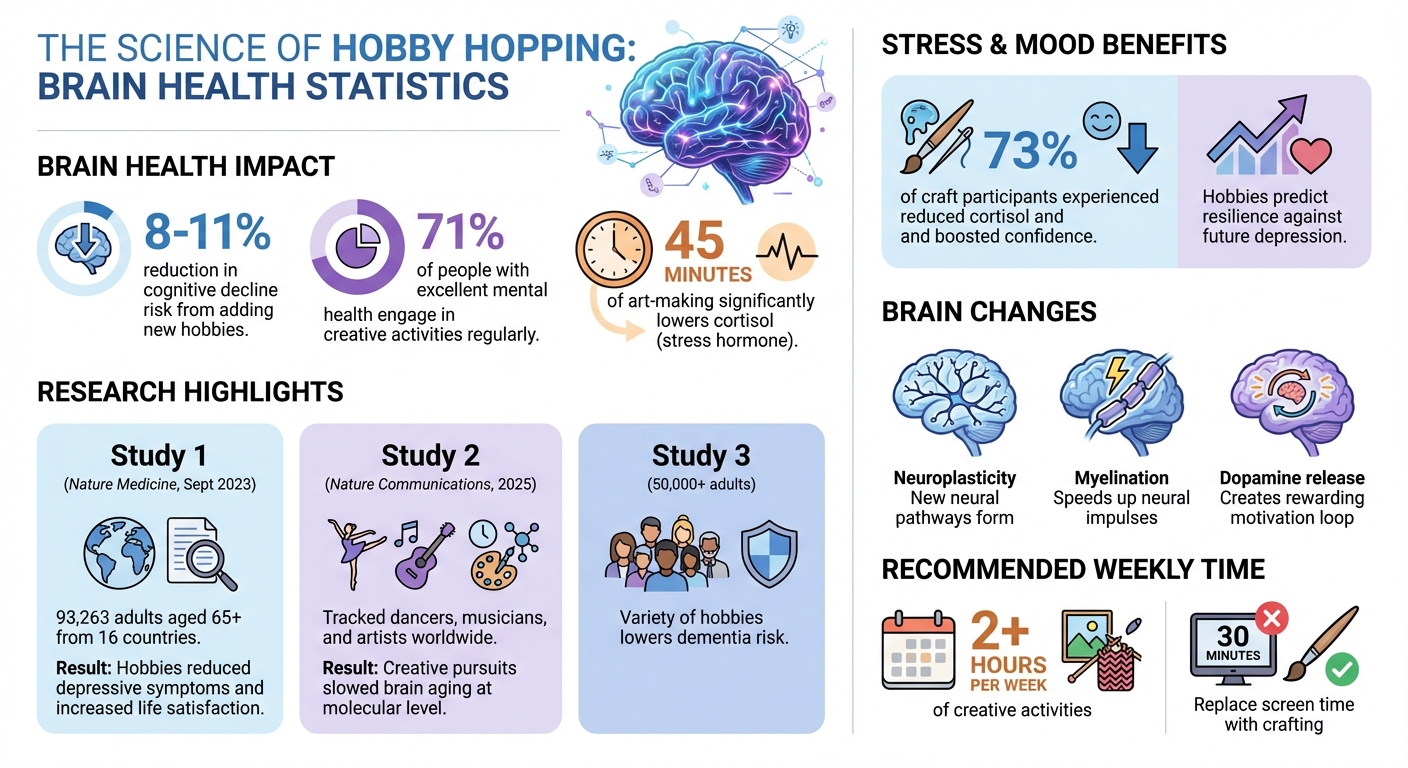
Brain Health Benefits of Creative Hobbies: Key Statistics and Research Findings
What Happens in Your Brain When You Try New Hobbies
How Neuroplasticity Works
When you pick up a paintbrush, thread an embroidery needle, or mix resin for the first time, your brain springs into action, forming new connections. This remarkable ability, known as neuroplasticity, allows your brain to create new pathways between neurons and even grow in volume.
On a cellular level, as you practice a new craft, your brain boosts myelination - a protective layer that surrounds nerve fibers. This speeds up neural impulses, making your thoughts sharper and your reactions quicker. Essentially, your brain becomes more efficient at processing information.
Creative hobbies also spark the release of dopamine, the "feel-good" neurotransmitter that keeps you motivated. > Dr. Ciara McCabe, Professor of Neuroscience at the University of Reading, explains: "You will then start to kind of kick-start the cycle where then you start to expect to enjoy the experience again, and then you become more motivated to seek out that experience." This surge of dopamine creates a rewarding loop, making the process of learning something new feel exciting and energizing.
These changes in your brain lay the groundwork for broader cognitive and emotional benefits, which we’ll explore next.
Mental Benefits of Learning New Crafts
The neural transformations sparked by creative hobbies translate into real-world mental and emotional perks. Different crafts activate unique areas of the brain - painting, for instance, can boost brain volume, while resin art stimulates regions linked to memory and decision-making.
In September 2023, a groundbreaking study led by H. Mak and published in Nature Medicine examined 93,263 adults aged 65 and older from 16 countries, including England, Japan, and the United States[1]. The findings revealed that engaging in hobbies significantly reduced depressive symptoms and increased life satisfaction across diverse populations. Similarly, a 2025 study by Coronel-Oliveros in Nature Communications tracked dancers, musicians, and artists worldwide, uncovering that these creative pursuits slowed brain aging at the molecular level, offering protection against cognitive decline[2]. These studies highlight how trying new crafts not only improves your skills but actively supports brain health.
Regularly exploring new hobbies also helps shield against conditions like dementia and Alzheimer's. By challenging your brain with fresh activities - whether it’s switching from painting to embroidery or diving into resin art - you’re building cognitive resilience. > Dr. Ken Duckworth, Chief Medical Officer of the National Alliance on Mental Illness, underscores this point: "Engaging in activities, particularly ones that help you feel connected to something - a mission, community, a belief system - are really valuable for people's mental health overall."
Brain-Boosting Projects from This Month's Craft
Now that we've explored how learning new skills can reshape your brain, let’s dive into specific projects that bring these benefits to life. Each month, This Month's Craft delivers beginner-friendly projects designed to engage various brain regions, making it simple to enjoy the mental rewards of trying new hobbies - without the hassle of gathering supplies. Here’s a closer look at some of this month’s offerings and how they give your brain a boost while sparking creativity.
Painting Projects
Painting is a fantastic way to tap into neuroplasticity, the brain's ability to adapt and grow. Engaging in painting activates your senses and releases dopamine, which enhances both motivation and pleasure. Studies have shown that people with excellent mental health are 71% more likely to engage in creative activities compared to those with lower mental health scores.
The Creative Box from This Month's Craft includes everything you need for painting projects - materials, instructions, and inspiration. As you mix colors and layer brushstrokes, you’re not just creating art; you’re also calming your stress response. According to UCLA Health, “Making art helps reduce cortisol (stress hormone), which is linked to lower blood pressure levels and heart rate.” Each session strengthens neural pathways and provides a mental escape from daily routines, helping to build resilience against stress and depression.
Resin Art
Resin art is more than just a trendy craft - it’s a workout for your brain. The process of measuring, layering, and timing resin pours engages the frontal and temporal lobes, which are key to memory and executive function. This hands-on activity encourages problem-solving and pulls you out of autopilot mode.
Neuropsychologist Dr. Shaliza Shorey explains, “For long-term brain health, I encourage adults to stay curious and playfully engage with a variety of hobbies simply for the sake of being in a state of creativity, which is so healthy for the brain.” The DIY Box from This Month's Craft provides pre-measured materials for resin art, making it easy to focus on the creative process. As you work, you’re building new thought patterns that can carry over into other areas of life.
Embroidery
Embroidery combines creativity with mindfulness, activating spatial and gestural skills that are essential for brain health. The repetitive motion of stitching helps quiet the mind, creating a flow state that reduces anxiety and lifts your mood. Even short embroidery sessions can leave you feeling calmer and more centered.
The Creative Box features beginner-friendly embroidery kits with pre-printed designs on cotton fabric, so there’s no need to worry about transferring patterns. As you stitch, you’re not only building fine motor skills and muscle memory but also activating your parasympathetic nervous system, which lowers cortisol while increasing serotonin and dopamine. Designer Amy Kallissa captures it perfectly: “There’s a mindfulness that comes with being able to sit and just stitch something beautiful.” These projects are manageable over a weekend and provide a sense of accomplishment while supporting your brain’s health over time.
These thoughtfully designed projects from This Month's Craft turn the science of neuroplasticity into hands-on activities that nurture both your brain and your creativity.
How to Overcome Hesitation and Start Trying New Hobbies
You’ve read about the benefits of exploring new hobbies and how they can boost your brainpower, but what if you’re still feeling hesitant? It’s completely normal to feel stuck, whether it’s due to perfectionism, productivity guilt, or the belief that you’re "not creative enough." The good news? Taking that first step doesn’t have to be intimidating. With the right mindset and tools, you can ease into a new hobby without feeling overwhelmed.
Start Small and Keep It Simple
It’s easy to fall into the trap of thinking you need to be perfect right from the start. Social media often showcases polished, flawless results that can make beginners feel like their efforts won’t measure up. But perfection isn’t the goal - starting is.
Dr. Sarah Griffiths, Lead Behavioural Insights Advisor at Bupa, explains: "As with other habits, if you're starting something new then it's best to start small before trying anything more advanced or buying specialist equipment."
Begin with short, manageable sessions - just 15 to 30 minutes at a time. Choose straightforward projects that let you focus on the joy of creating rather than the pressure to excel. Even brief creative activities can have a meaningful impact. Studies show that just 45 minutes of making art can lower cortisol levels and boost your confidence. As WelbeHealth suggests: > "Focus on enjoying the process, not being perfect." These small, simple steps can lead to long-term mental and emotional benefits.
Try All-Inclusive Craft Kits
Getting started is often the hardest part, especially when you’re unsure what materials you’ll need or how to use them. This is where all-inclusive craft kits can make a huge difference. These kits provide everything you need in one box, eliminating the stress of gathering supplies and letting you jump straight into creating.
Options like the Creative Box and DIY Box from This Month's Craft are designed for beginners, offering pre-measured materials, tools, and clear instructions. Whether you’re curious about painting, resin art, or embroidery, these kits allow you to explore without the hassle of shopping for supplies or worrying about overspending. They also help you avoid the "all or nothing" mindset - where you either go all-in on a hobby or abandon it when it feels too overwhelming. Instead, these curated kits make it easy to take "micro-breaks" for creativity, fitting seamlessly into your routine and building your confidence one project at a time.
sbb-itb-8216914
Building a Hobby Rotation Schedule
Once you've moved past the initial uncertainty and tried a few new crafts, the next step is to carve out time for your creative endeavors. Rotating through different hobbies not only keeps things interesting but also helps your brain stay sharp by forming new neural connections. Aim to dedicate at least two hours each week to a mix of creative activities. By planning a variety of projects each month, you can keep the momentum going from your earlier sessions.
Step-by-Step Guide for Trying New Crafts Monthly
To make the most of your creative energy, try this monthly approach. Start by dividing your activities into three categories: Mental (like embroidery or resin art), Physical (such as woodworking or gardening), and Reflective/Spiritual (like journaling or taking nature walks). Each month, pick one project from a different category to ensure a well-rounded creative experience. This method aligns with findings from a study of over 50,000 adults, which showed that engaging in a variety of hobbies can lower the risk of dementia.
Consider replacing 30 minutes of evening screen time with a quick craft session, or use your morning coffee break to experiment with something creative. Dr. Shaliza Shorey highlights that regularly switching between creative activities can foster long-term brain health. If a packed schedule feels daunting, start small with short, manageable creative breaks. These moments can activate your brain’s reward system, releasing dopamine and motivating you to continue.
Creative Box vs. DIY Box: Which Plan Matches Your Goals?
Choosing the right subscription plan can make organizing your hobby rotation a breeze. The Creative Box is perfect for calming, artistic endeavors like soap making, painting, or embroidery. These repetitive, meditative activities can help you focus on the present, as Dr. Jannel Phillips, a neuropsychologist at Henry Ford Health, explains:
"Engaging in repetitive, rhythmic activities can be calming. This allows you to focus on the present moment, rather than worries or stressors."
On the other hand, the DIY Box offers more hands-on projects like woodworking or carving, which involve problem-solving and physical engagement. If you’re looking to challenge your brain with new techniques while building practical skills, this option provides a more dynamic mental workout.
To keep things fresh and engaging, consider alternating between the two plans every few months. This variety helps stimulate different cognitive systems and prevents creative burnout. In fact, 71% of people who report excellent mental health regularly participate in creative activities. Mixing up your craft types ensures your brain stays engaged while making the experience enjoyable and rewarding.
Conclusion: Try New Hobbies for Better Brain Health
Science has shown that picking up new hobbies isn’t just a fun way to spend your time - it’s a powerful tool for keeping your brain healthy. Engaging in fresh activities strengthens neural connections and improves memory. In fact, research indicates that adding new hobbies to your life can lower the risk of cognitive decline by 8–11%. Think of it as mental cross-training, keeping your mind sharp and adaptable.
Beyond brain health, creative hobbies offer incredible stress relief and mood enhancement. Activities like crafting can reduce cortisol levels and boost confidence for 73% of participants. Research continues to highlight how hobbies contribute to overall well-being. Dr. Ciara McCabe, Professor of Neuroscience at the University of Reading, emphasizes:
"Partaking in hobbies seems to predict a kind of resilience against getting depression in the future."
The secret lies in variety, not perfection. You don’t need to master a single skill to enjoy the benefits. It’s the act of challenging yourself and learning something new that keeps your brain engaged and thriving. This is where This Month's Craft makes it easy by delivering all-inclusive kits straight to your door for $35.97/month. Each kit includes materials, tools, and step-by-step instructions, making it simple to dive into a new craft. Whether you’re drawn to the calming projects in the Creative Box or the hands-on experiences in the DIY Box, you’ll explore something fresh every month.
Why wait? Take the first step toward a healthier, more resilient mind. Discover the joy of crafting with This Month's Craft and unlock the benefits of trying something new.
FAQs
How can trying new hobbies benefit your brain?
Exploring new hobbies can do wonders for your brain. When you pick up a new skill, it sparks neuroplasticity - your brain's ability to create and strengthen neural connections. This not only sharpens your memory but also boosts mental flexibility, helping your mind stay sharp and vibrant.
On top of that, diving into fresh activities can increase dopamine levels, which naturally lifts your mood and eases stress or feelings of sadness. Whether you're painting, trying your hand at embroidery, or experimenting with resin art, creative hobbies challenge your problem-solving skills and push you to think in new ways. It’s a fun and rewarding way to nurture your mental health.
What are the advantages of using all-in-one craft kits for beginners?
All-in-one craft kits simplify the creative process by including everything you need - materials, tools, and step-by-step instructions. With everything in one place, you can dive into a new project without the hassle of hunting down supplies. This setup is perfect for beginners, allowing you to focus on the fun of crafting rather than the logistics.
These kits also help build confidence and refine skills. As you follow the instructions, you'll naturally improve hand-eye coordination, memory, and fine motor skills. Beyond the physical benefits, crafting has a calming effect - it encourages mindfulness, reduces stress, and keeps you present in the moment.
Whether you're enjoying some solo downtime or crafting with friends and family, these kits provide a creative outlet that’s both relaxing and rewarding. They’re a great way to explore your artistic side while creating lasting memories with loved ones.
How can I get past my hesitation to start a new hobby?
Starting a new hobby can feel a bit daunting at first, but it’s worth it. Research shows that hobbies not only lift your mood and spark creativity but also support brain health and help lower stress levels. Even small creative efforts can have a big impact on your overall well-being, which might make taking that first step a little easier.
If you’re unsure where to begin, try starting with something simple like a painting kit, resin art set, or an embroidery starter pack from This Month’s Craft. These kits include pre-measured supplies and detailed instructions, so you can jump in without feeling lost. Set aside just 15–30 minutes at a time, keeping it light and enjoyable as you explore your creative side.
Every new hobby is a chance to learn and grow. Celebrate the little victories - whether it’s your first brushstroke or finishing a basic embroidery pattern - and savor the experience of picking up a new skill. With time, you’ll find yourself gaining confidence and discovering just how fulfilling it is to try something new.