
From Hot Sauce to Wood Carving: How to Master a New Skill Every Month
Trying something new every month can feel overwhelming, but it doesn’t have to be. With This Month’s Craft, you’ll get everything you need to dive into hands-on projects like hot sauce making or wood carving - no guesswork, no extra shopping trips. Each kit brings high-quality materials, tools, and step-by-step instructions straight to your door for just $35.97 a month. Whether you’re looking for a relaxing artistic escape or a practical challenge, there’s something for everyone.
Let’s explore how you can make the most of this monthly adventure and discover simple ways to create something meaningful.
Why Learn a New Skill Every Month
The Benefits of Variety and Discovery
Picking up a new skill every month can completely transform your routine, keeping your mind active and your creativity flowing. Unlike sticking to just one hobby, trying something fresh - like making hot sauce one month and diving into wood carving the next - keeps things exciting and prevents burnout. This constant change not only keeps you on your toes but also helps you uncover talents and interests you might not have realized you had.
There’s something incredibly rewarding about creating with your hands. Each project, whether it’s bottling your own hot sauce or crafting a wooden masterpiece, results in something you can see, hold, and feel proud of. As Alex H., a happy participant, shares:
It's empowering to create something with my own hands, and the results are always impressive.
These hands-on projects don’t just build confidence - they can also ignite a passion you didn’t expect. What starts as a fun challenge can quickly grow into a favorite pastime. Plus, with everything delivered to you in a ready-to-go kit each month, starting something new is easier than ever.
How This Month's Craft Makes Skill-Building Easy
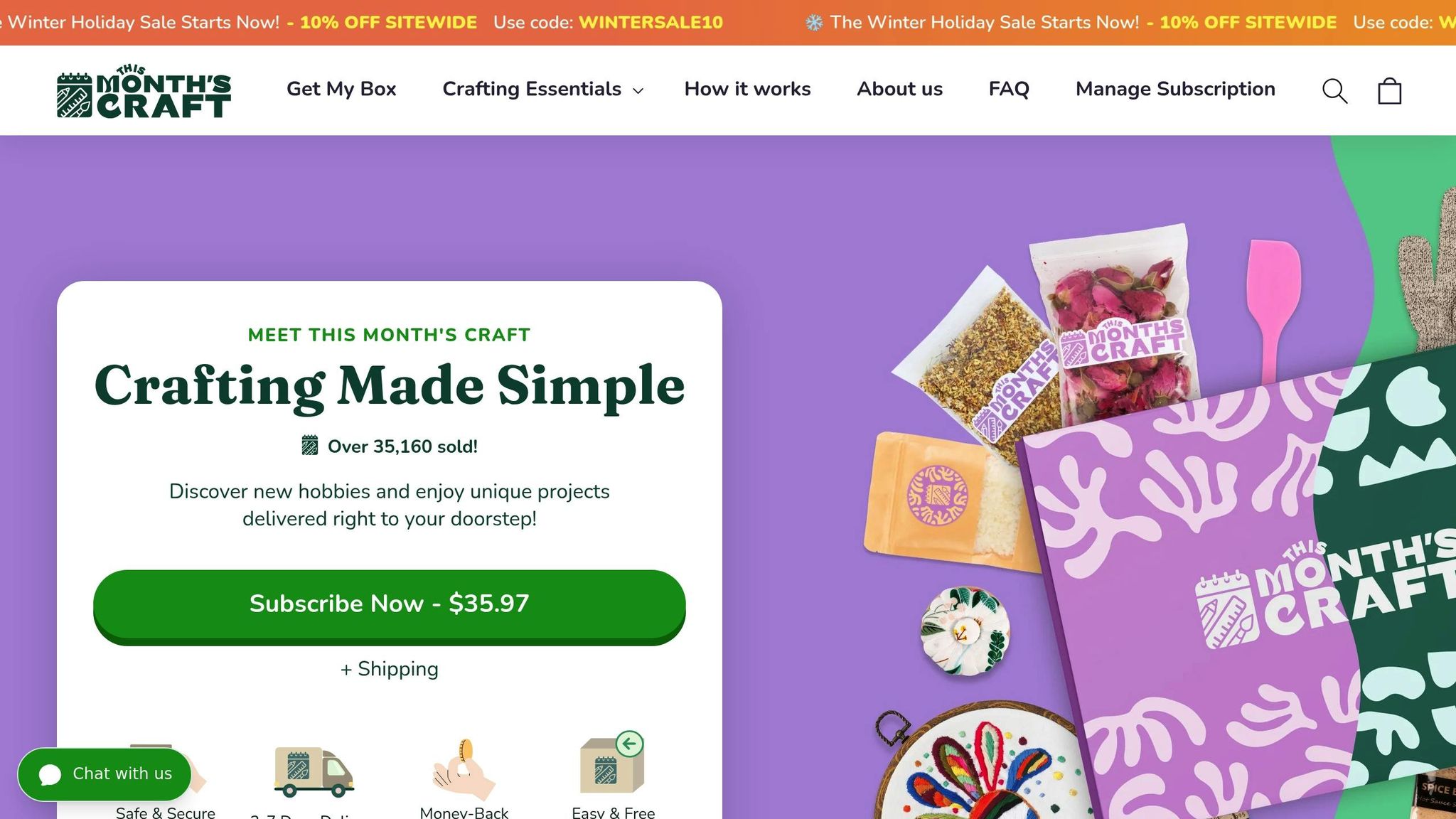
This Month's Craft removes the guesswork from picking up a new hobby. One of the biggest hurdles to starting a project is figuring out what supplies you need and where to begin. This Month's Craft solves that by delivering a complete kit straight to your door. For $35.97 a month, you’ll receive premium materials, the right tools, and easy-to-follow instructions to guide you through every step.
You can choose between two options: the Creative Box, perfect for relaxing artistic projects, or the DIY Box, which offers hands-on challenges like woodworking or carving. Both options give you the freedom to pause, skip, or cancel anytime - no long-term commitments required. Each month becomes an exciting new journey, and there’s always something to look forward to. With everything you need at your fingertips, you’re all set to dive into your next creative adventure.
How to Select Your Monthly Projects
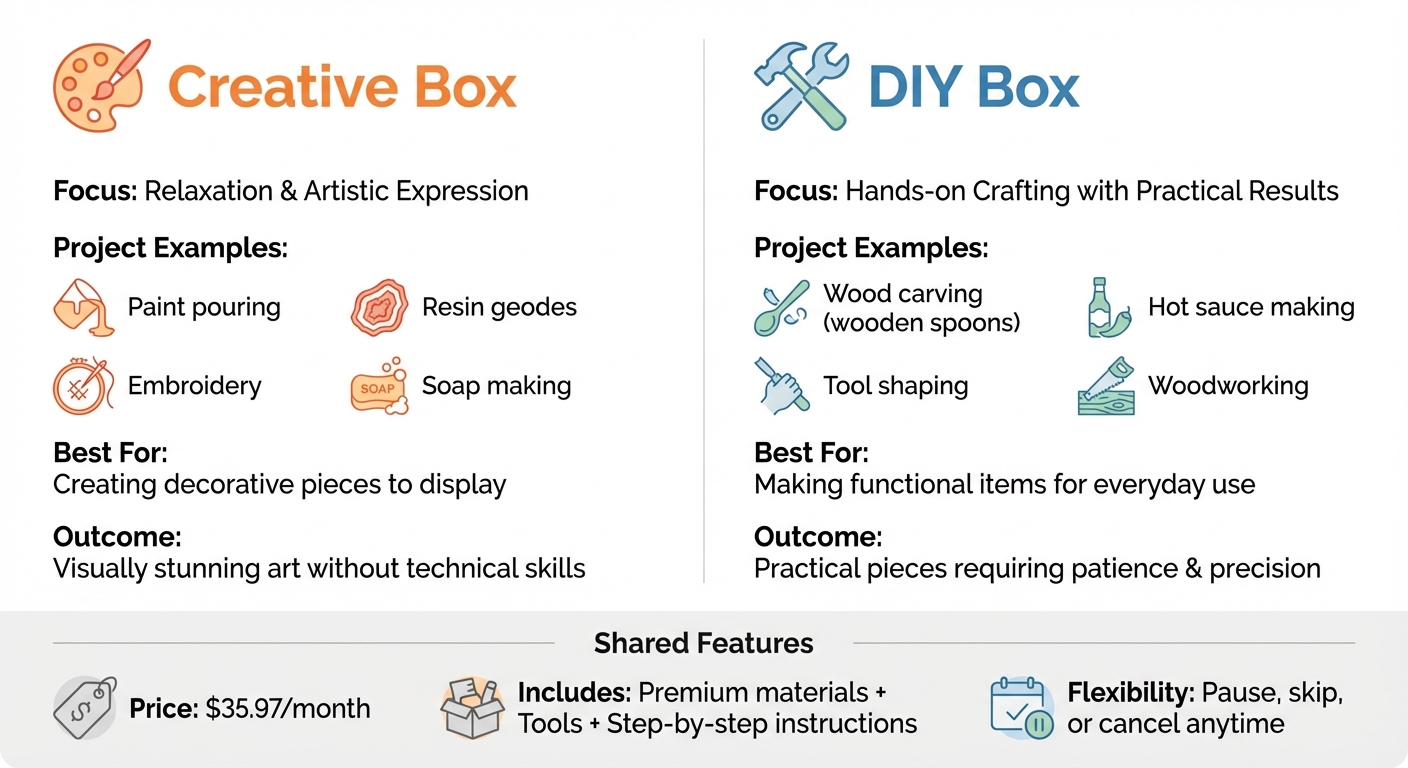
Creative Box vs DIY Box: Choose Your Monthly Craft Project
Creative Box vs. DIY Box: Which One Fits You Best?
Choosing your monthly project starts with deciding what kind of experience you’re after. This Month's Craft offers two exciting options: the Creative Box and the DIY Box, each tailored to a different kind of maker.
The Creative Box is all about relaxation and artistic expression. It’s perfect for projects like paint pouring, resin geodes, or embroidery - activities that let you focus on creating something visually stunning without worrying about technical skills or functionality. These projects are ideal when you’re looking to unwind and make something beautiful to display.
The DIY Box, on the other hand, is for those who enjoy hands-on crafting with a practical outcome. Projects like carving wooden spoons, mixing up custom hot sauce, or shaping tools require a bit more patience and precision, but the reward is a functional piece you can use in your home. As carpenter Robert Maxwell explains:
Basswood, pine and aspen are top choices for beginner wood carving. These softwoods are easy to shape, forgiving on tools and ideal for learning basic carving techniques.
So, what’s your goal? Do you want a decorative piece to showcase your creativity, or a practical item to use in your everyday life? Once you’ve answered that, you’re ready to dive into the specific projects that excite you most.
Project Ideas to Inspire Your Next Creation
There’s a wide variety of projects to explore, depending on your interests and skill level. For those drawn to the DIY side, hot sauce making is a fantastic beginner project. It combines culinary experimentation with a touch of science. Simply mix fresh peppers, vinegar, and salt to create a base, and if you’re feeling adventurous, try fermenting the mixture for anywhere from two weeks to six months for a deeper, more complex flavor. Just remember to wear gloves when handling hot peppers and work in a well-ventilated space.
If you enjoy working with your hands, wood carving is another satisfying option. Beginners can start with softwoods like basswood or pine, which are easier to shape and more forgiving. Simple projects like carving a small mouse or a toy sword can be completed in an afternoon, making it a great way to build confidence. As your skills grow, you can move on to more detailed creations like wooden spoons or intricate designs featuring flowers or lettering.
For those leaning toward the artistic side, soap making and embroidery are approachable and rewarding choices. These projects are beginner-friendly, with minimal safety concerns, and they deliver immediate results. Whether you’re swirling colors into handmade soap or stitching a delicate floral pattern, these crafts offer a chance to create something visually pleasing while honing your skills.
With This Month's Craft, every month brings a new opportunity to try something different. Whether you’re crafting for beauty or utility, there’s always a project waiting to spark your creativity.
Getting Materials and Tools Without the Hassle
The Advantage of Complete Kits
Starting a new hobby can feel overwhelming, especially when you're faced with the task of gathering all the necessary materials and tools. It’s easy to lose momentum before you even begin. That’s where This Month's Craft steps in, delivering everything you need in one convenient package. This thoughtful setup ensures you can dive straight into crafting without interruptions or extra errands, making it easier to explore new skills every month.
Each kit is packed with all the essentials - from tools to materials - so you won’t waste time hunting down supplies. As highlighted by Good Housekeeping:
Each kit comes with everything to complete the craft and produce a beautiful final product without hunting for all the different tools and instructions you may need.
This all-in-one approach not only saves time but also eliminates the guesswork. Instead of spending hours researching or making multiple store trips, you can get started the moment your box arrives. It’s a hassle-free way to try out a new hobby without committing to the cost of bulk supplies for something you’re just testing out.
Why Good Supplies Lead to Better Results
Convenience is important, but the quality of materials can make or break your crafting experience. Poor-quality tools and supplies can lead to frustration, slow your progress, and even make the process less enjoyable. This Month's Craft ensures every kit includes high-quality materials chosen specifically to help beginners succeed.
For instance, in a wood carving kit, basswood is included because its smooth, fine-grained texture is ideal for those just starting out. If you’re making hot sauce, the kit provides pre-measured, premium ingredients to guarantee consistency and minimize waste. High-quality supplies allow you to focus on learning the craft itself rather than struggling with subpar tools. Jeremy Walsh, owner of Bigfat’s Hot Sauce, puts it best:
Starting up is an investment and the more you know before you start shelling out money the less you waste making mistakes.
Good tools also enhance safety and efficiency. Sharp carving tools and precise pH strips, for example, are not only safer to use but also help you achieve better results. For hot sauce, maintaining a pH level below 4.6 (ideally closer to 4.0) ensures safety while accounting for minor errors. With quality supplies in hand, you can fully immerse yourself in the joy of crafting without unnecessary setbacks.
sbb-itb-8216914
How to Make Hot Sauce: A Step-by-Step Guide
Making your own hot sauce is simpler than it sounds, especially with the help of your complete kit from This Month's Craft Creative Box. The kit includes everything you need - from fresh peppers to bottling tools - to guide you through the fermentation process. With high-quality ingredients and clear instructions, you’ll create a flavorful, long-lasting sauce that can hold its own against store-bought options. Follow these easy steps to turn your kit’s contents into a delicious hot sauce.
Get Your Ingredients and Tools Ready
Start by setting up a clean workspace with good ventilation. When handling hot peppers, wear gloves to protect your skin from burns. Rinse the peppers you’ve chosen (like Fresno, habanero, or jalapeño) and remove the woody stems, as they don’t contribute to flavor and can affect texture. If you prefer less heat, you can also remove the seeds and the pith.
To make the brine, mix filtered water with kosher salt at a ratio of 2–4% by weight. This balance is important - it prevents spoilage while encouraging the growth of lactic acid bacteria. Your kit comes with a glass fermentation jar, fermentation weights to keep the peppers submerged, and either an airlock or cheesecloth to let carbon dioxide escape while keeping impurities out.
Ferment the Peppers
Once your ingredients are prepped, it’s time to start fermentation. Place the peppers into the glass jar and pour the brine over them, ensuring all the solids are fully submerged. Use the included fermentation weights or a brine-filled zipper-lock bag to keep everything below the liquid’s surface - this step is crucial to prevent mold. Seal the jar with the airlock, creating the oxygen-free environment needed for safe fermentation.
Store the jar in a spot with a consistent room temperature, ideally between 60°F and 70°F. Over the next 7 to 14 days, you’ll see bubbles forming as lactic acid bacteria feed on the peppers’ natural sugars. Fermentation expert Kirsten Shockey explains:
As soon as it tastes acidic, you're generally good to go. My palate has never been wrong.
Check the jar daily to ensure the peppers stay submerged, and keep an eye out for a tangy, sour smell. Use the pH strips from your kit to test the acidity - your goal is a pH of 4.0 or lower, which ensures the sauce is safe and shelf-stable.
Blend and Bottle Your Hot Sauce
When fermentation is complete, transfer the peppers and brine to a blender. Blend the mixture until smooth, which typically takes 1–3 minutes. For a thinner, more polished sauce, strain it through a fine-mesh strainer to remove seeds and pulp. Don’t toss the solids - they can be dehydrated and ground into a chili seasoning powder.
To keep your sauce from separating, add xanthan gum during blending at about 0.3% by weight. This small addition creates a silky, uniform texture. If you want to tweak the flavor, try adding white or apple cider vinegar for more tang, or a touch of honey or sugar to balance the heat. Once you’re satisfied with the flavor and consistency, pour the sauce into the sanitized woozy bottles provided in your kit. Seal the bottles tightly and store them in the refrigerator for up to six months.
Now, your homemade hot sauce is ready to enjoy! Whether you drizzle it on your favorite dishes or gift it to friends, you’ve got a flavorful creation to be proud of.
How to Carve Wood: A Step-by-Step Guide
Wood carving might seem intimidating at first, but it's surprisingly accessible, especially with the right tools and guidance. Your This Month's Craft DIY Box includes everything you need to get started: basswood blocks, a carving knife, anti-cut protective wrap, sandpaper in various grits, beeswax, a leather strop with stropping compound, and detailed instructions to walk you through your first project. Basswood is a fantastic choice for beginners because of its soft texture and fine grain, which makes it easy to carve without splintering.
Set Up Your Workspace and Tools
Before diving in, set up a well-lit area to work. Safety is key, so wear protective glasses to guard against stray wood chips, and wrap the included protective covering around the fingers of your non-dominant hand - the one holding the wood. The carving knife in your kit features a fixed blade made of high-carbon steel, which is both safer and more reliable than retractable blades. As carpenter and builder Robert Maxwell puts it:
A pocket knife and a piece of wood is all you need to start.
To keep your knife performing at its best, use the leather strop and stropping compound every 30 minutes. A sharp blade cuts smoothly and with less effort, while a dull one can slip and lead to accidents. Always position your hands behind the knife’s cutting edge, and carve away from your body to minimize the risk of injury. Once your workspace and tools are ready, you’re set to start planning your design.
Sketch Your Design and Begin Carving
Start by sketching a simple design - think leaves, spoons, or geometric shapes - right onto the basswood. Begin carving by removing larger chunks of wood to create a rough outline of the shape. At this stage, focus on forming the basic three-dimensional structure; you can add finer details later.
Make sure to carve with the grain, following the natural lines in the wood. If you notice splintering or tearing, it’s a sign you’re going against the grain - adjust your direction accordingly. Garrett Faust, a designer and fabricator, underscores this:
Always carve along the grain, following the lines that run through the wood.
As your piece starts to take shape, switch to shorter, more controlled strokes to refine the details. Use the tip of your knife for intricate areas and rely on wrist movements rather than your elbow for better precision and control.
Smooth and Finish Your Carving
Once your carving is fully shaped, it’s time to smooth and finish it. Start with coarse sandpaper, such as 80 or 120 grit, to remove tool marks and even out rough spots. Gradually move to finer grits like 220 and 400, ensuring the surface feels smooth and polished. Sanding also allows you to refine areas that are tough to reach with your knife.
To complete your piece, apply a small amount of beeswax using a clean rag. This not only protects the wood from moisture but also enhances its natural color. Let the wax sit for a moment, then buff it with a soft cloth for a subtle sheen. Your carving is now ready to display or share as a thoughtful gift.
How to Track Your Progress and Stay Motivated
As you dive into new crafts, keeping track of your progress can make each project more rewarding. Learning something new every month can feel thrilling, but staying motivated often hinges on how well you track your growth and set goals. Simple tools like journals, photos, and practical goal-setting can help you see just how far you’ve come - and keep you excited for what’s next. Let’s explore a few ways to document your journey, mix up your projects, and set clear objectives.
Keep a Journal or Photo Record
One of the best ways to capture your progress is by documenting it. Take photos of each completed project, focusing on the details that make it unique - like the intricate wood grain of a carved spoon or the bold colors of a homemade hot sauce. Pair these photos with a journal where you can jot down specifics. For example, if you're working on hot sauce, note its flavor, heat level, color, and even the feedback you get from others. For woodworking, track the materials you used and techniques you tried. These records aren’t just keepsakes - they’re proof of your growth and a confidence boost when you see how much you’ve improved.
As Woodcraft reminds us:
For online sales, photography becomes your storefront. Clear and inviting images give buyers confidence to click purchase.
Mike Hultquist, author of Chili Pepper Madness, also emphasizes the value of feedback:
Test your recipes thoroughly. Invite friends over to give you a reaction. Try them out on acquaintances. Get a lot of feedback, not only on the taste, but the color, heat level, smell and more. Take notes and listen.
For woodworking enthusiasts, holding onto those early creations can be a powerful motivator. Robert Maxwell, a carpenter and builder, shares:
I kept the fork as a memento, along with a spoon I carved.
These early attempts might look rough, but they serve as tangible reminders of how far you’ve come.
Switch Between Creative and DIY Projects
To keep things interesting, try alternating between creative and hands-on DIY projects. Creative activities like resin art, painting, or jewelry making tap into your artistic side, while DIY projects like woodworking, gardening, or cooking challenge your problem-solving skills. This variety keeps your journey fresh and engaging. For instance, after completing a detailed carving project, switching to a vibrant painting kit can reignite your enthusiasm and give your brain a different kind of workout.
Set Monthly Goals
Clear, specific goals can help you stay on track and celebrate your achievements. Instead of vague intentions like "improve my carving", aim for something measurable, like "finish a carved wooden spoon with smooth edges" or "create a hot sauce with a pH below 4.0." Breaking projects into smaller, manageable steps - like dedicating just 15 minutes a day - makes it easier to maintain momentum. And when you complete a project, take a moment to celebrate before moving on to your next challenge. Small victories are worth savoring!
FAQs
What are the benefits of learning a new skill every month?
Learning a new skill every month offers a world of benefits for both personal and professional growth. It keeps your brain engaged, boosts your confidence, and builds a habit of purposeful, goal-driven learning. Whether you're experimenting with making hot sauce, trying your hand at wood carving, or diving into a new craft, each new skill fuels your creativity and leaves you with a sense of achievement.
On the professional side, this practice can help you stay flexible, increase your efficiency, and prepare you to navigate changes in the workplace. Regularly picking up new skills sharpens your problem-solving abilities and keeps you ahead in your field. Personally, it sparks curiosity, eases stress, and brings joy and fulfillment to your everyday routine. By challenging yourself to master something new each month, you set the stage for continuous growth, adaptability, and a rewarding sense of accomplishment.
How does This Month's Craft ensure the materials in their kits are high quality?
At This Month's Craft, we take pride in delivering top-notch materials in every kit, ensuring your crafting journey is both enjoyable and satisfying. Every component is handpicked and tested to guarantee it meets our standards for durability, ease of use, and visual appeal.
We partner with reliable suppliers to bring you premium materials suited for all skill levels. Whether you're diving into wood carving, whipping up homemade hot sauce, or tackling another creative project, our kits are designed to equip you with everything you need to create with confidence.
What’s the difference between the Creative Box and the DIY Box?
Currently, there’s no detailed information about the Creative Box or the DIY Box. When choosing between the two, think about what sparks your interest the most - whether you enjoy hands-on crafting or experimenting with fresh creative techniques.
For a closer look, visit the descriptions on This Month’s Craft and find the option that matches your style!